Waste on MV
Martha’s Vineyard has long worked to manage waste responsibly, but food waste remains one of the Island’s most pressing and solvable challenges. Food scraps make up a significant portion of what we throw away—and on an Island, every ton matters.
Food Waste as a Climate & Community Opportunity
An estimated 6,500 tons of food waste are generated on the Island each year, roughly one-third from commercial sources and two-thirds from households. While pilot programs have shown strong community participation and demand for local compost, the Island currently lacks a permanent facility to process food scraps.
This gap matters—because food waste is heavy, costly to ship, and a missed opportunity to create local, high-quality compost that supports Island agriculture and reduces reliance on off-Island inputs.
The State of Food Waste on MV
Martha’s Vineyard has long worked to manage waste responsibly, but food waste remains one of the Island’s most pressing and solvable challenges. Food scraps make up a significant portion of what we throw away—and on an Island, every ton matters.
Separation works—but infrastructure is missing
Massachusetts food waste bans are expanding
Local compost is in high demand
Scale matters on an Island
Heavy, Costly, and Hard to Move
2017 Island-Wide Organics Feasibility Study Report
The study was conducted between March 2016 and May 2017. The purpose of the yearlong Island-Wide Organics Feasibility Study was to examine issues around food waste recycling on the Island and develop recommendations for local food waste management.
Prepared by: Sophie Abrams, Project Manager and Robert Spencer, Environmental Consultant, Brattleboro Vermont
This Study was funded by a grant from the Martha’s Vineyard Vision Fellowship.
2021 Issues and Opportunities around Food Waste on Martha’s Vineyard
The study outlines how food scraps make up a significant share of the Island’s waste stream and highlights both the infrastructure limitations and the strong local demand for diversion and composting solutions. It identifies barriers — including lack of permanent processing capacity, seasonal population shifts, and regulatory trends — while framing on-Island composting as an opportunity to reduce disposal costs, cut greenhouse gas emissions, and produce nutrient-rich soil amendments for local agriculture. The report also emphasizes the need for coordinated, Island-wide planning and education to build scalable, sustainable food waste systems.
Prepared by: Eunice Youmans and funded by The Fink Family Foundation
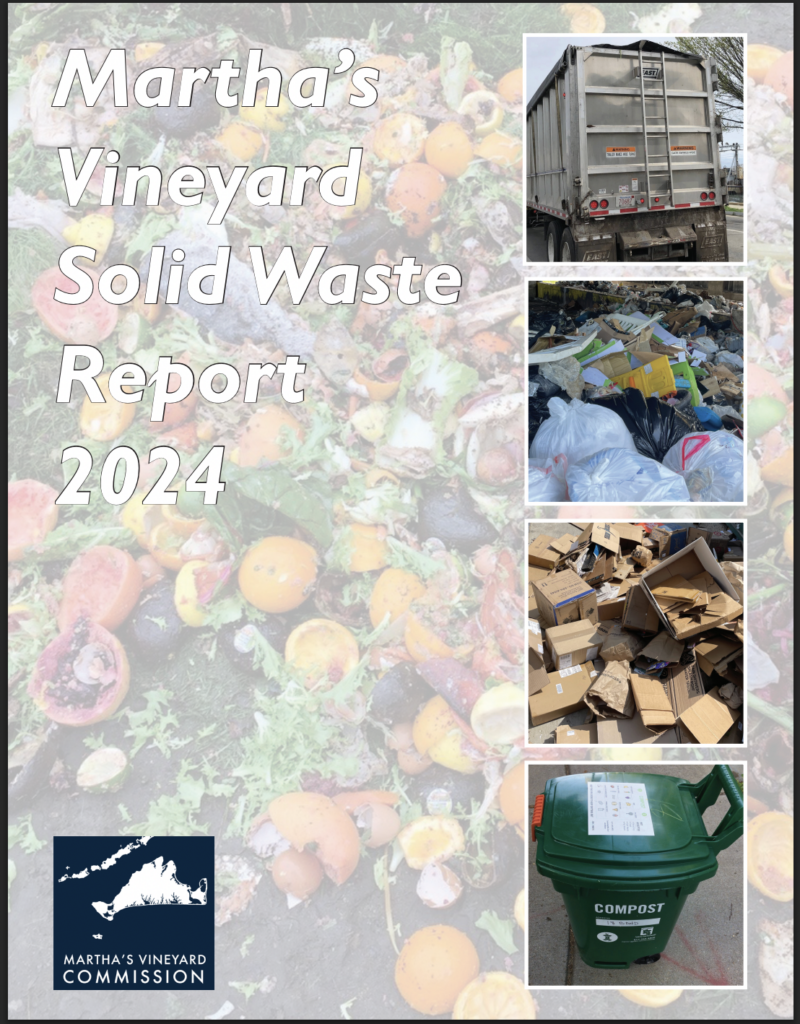
2024 Martha’s Vineyard Solid Waste Report
This report seeks to provide information on the island’s current solid waste stream, as well as ideas and thoughts derived from a recent Cape Cod study that can help inform an updated approach. The world of solid waste disposal is changing. Studies of the island’s waste stream have been done in the past, with a more recent one completed for the Cape. Gathering decision makers, Island waste experts and haulers together could provide an opportunity to review the island’s present conditions and chart a course to best handle the solid waste stream now and into the future.
Such an approach will allow Martha’s Vineyard to plan for best practices in the handling of island waste from an economic and environmental perspective.
Prepared by: The Martha’s Vineyard Commission
What You Can Do Right Now
Even without a permanent Island-wide food waste facility, individual actions still matter. Here’s how residents can meaningfully reduce food waste today—and help build momentum for future solutions.
Reduce Food Waste at Home
Separate Food Scraps When Possible
Compost at Home
Support Food-Waste-Conscious Businesses
Stay Engaged
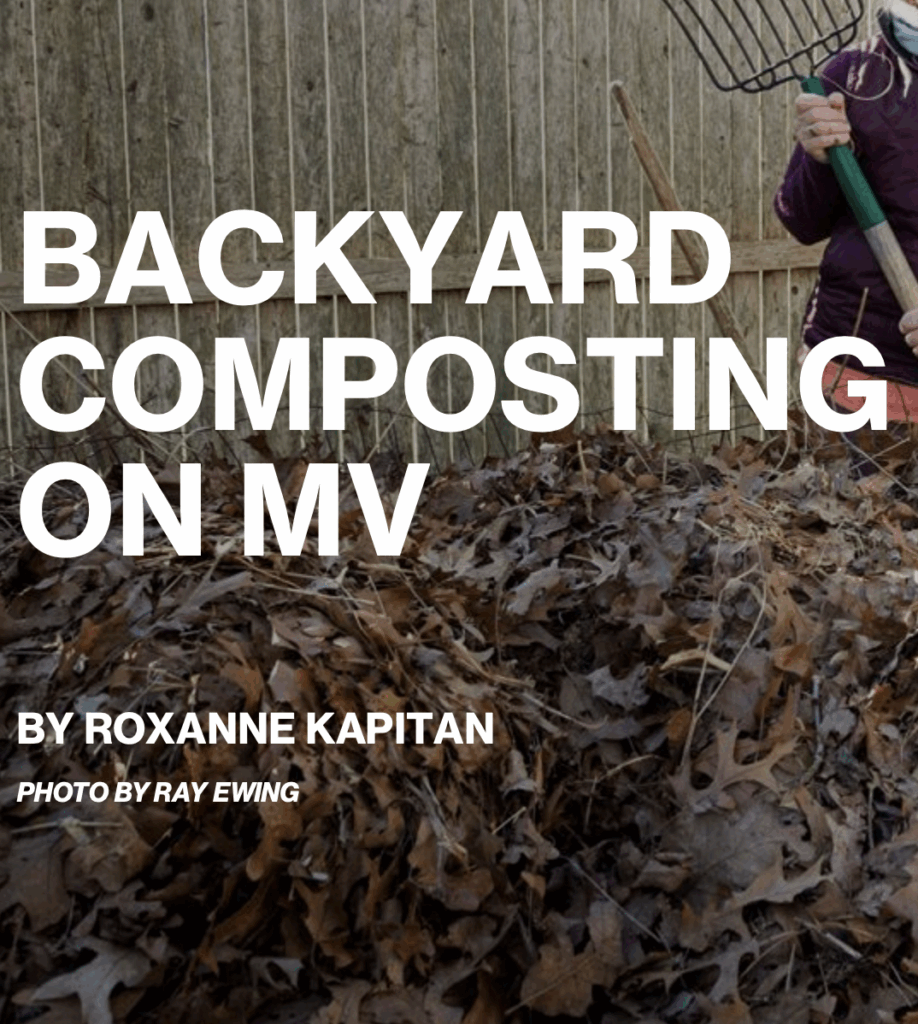
2025 Martha’s Vineyard Backyard Composting
This guide shares tips and best practices for various methods of backyard composting. Composting can reduce the amount of yard and food waste and decrease the cost and footprint of disposing of household waste.
Creating nutrient rich compost in your own backyard supports plant health and reduces the household need to purchase bagged compost and fertilizer.
Prepared by: Roxanne Kapitan and sponsored by the MV Vision Fellowship and Island Grown Initiative

2026 Community Climate Discussion on the Solid Waste Stream
Community Climate Discussion brought together an inspiring pair of local experts to talk about the Island’s solid waste challenges and opportunities — from recycling and food waste to composting and community action. The discussion, held at the Oak Bluffs Library as part of ongoing climate and sustainability efforts, highlighted not only the complexity of the Island’s waste stream but also the creativity and commitment Islanders bring to solving it.
Prepared by: Marilyn Miller and Peter Meleney of the Oak Bluffs Climate & Energy Advisory Committee