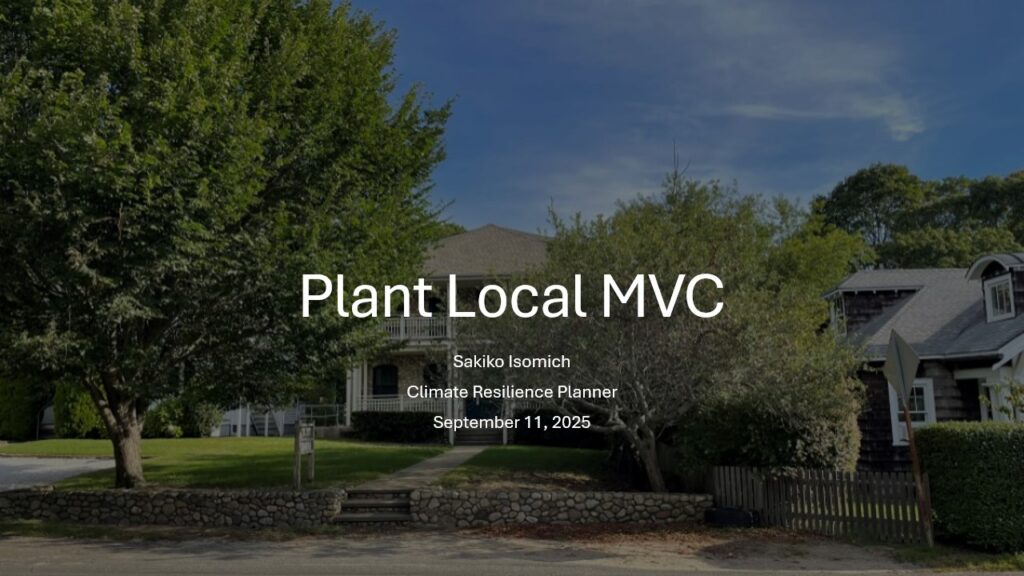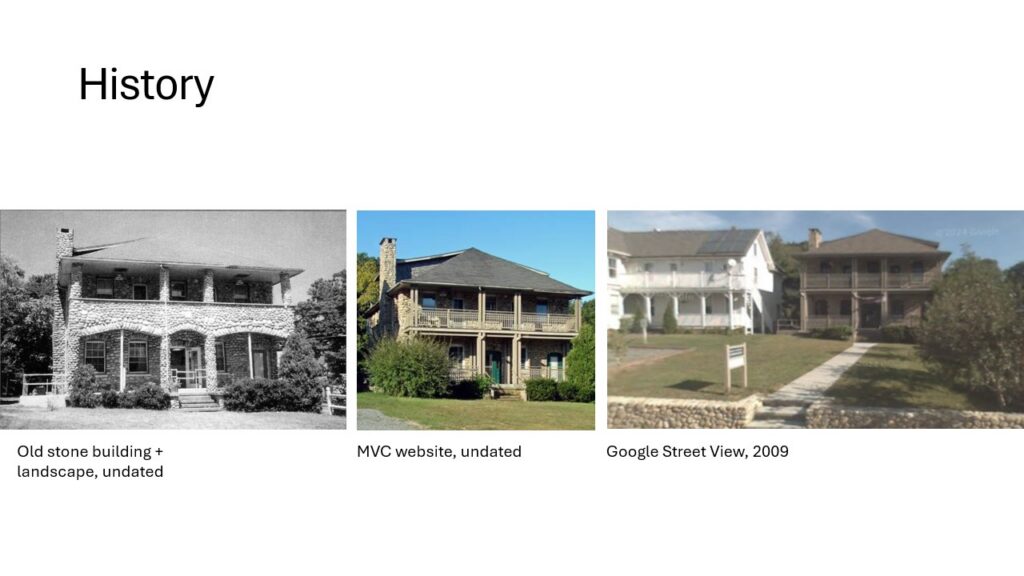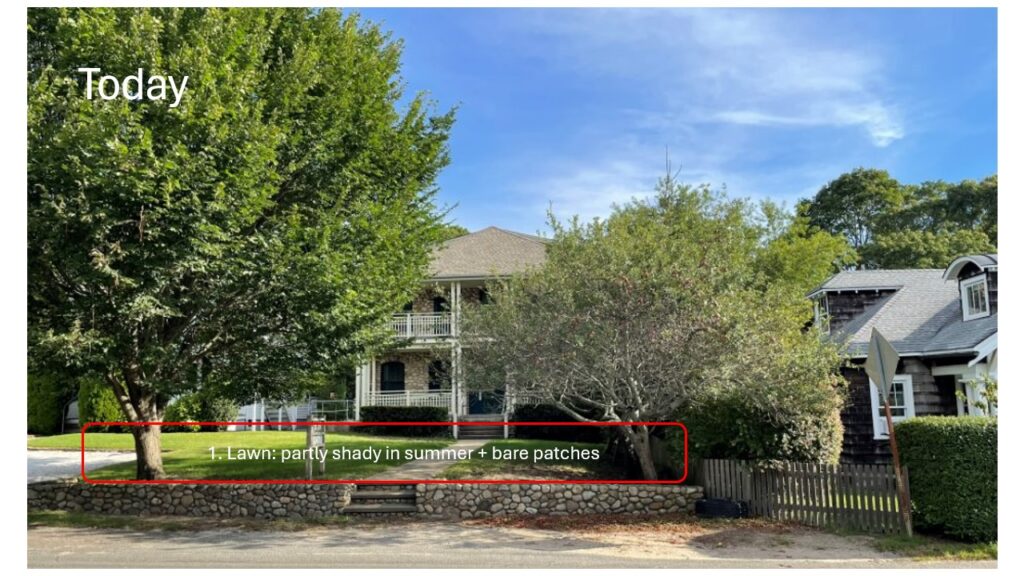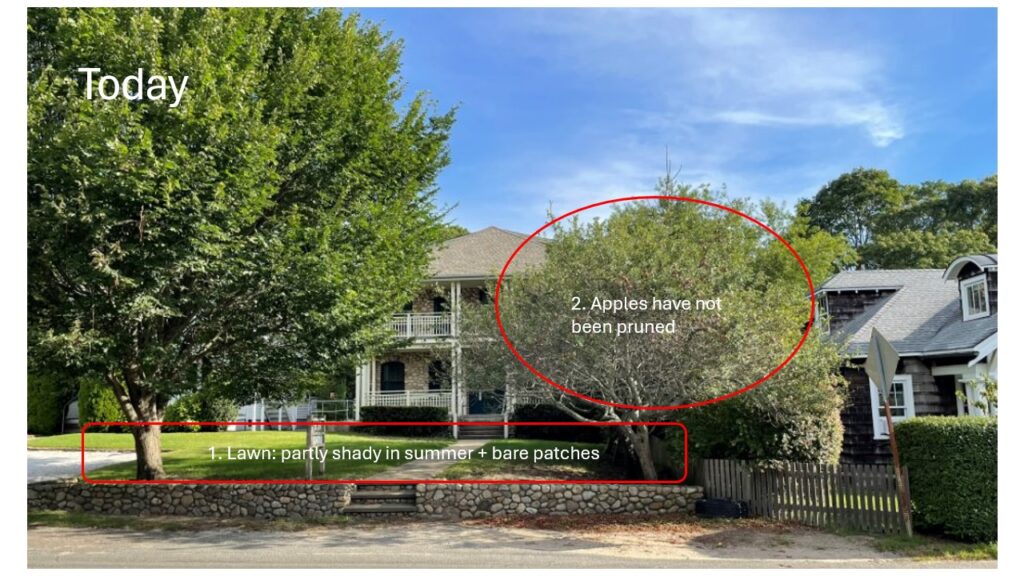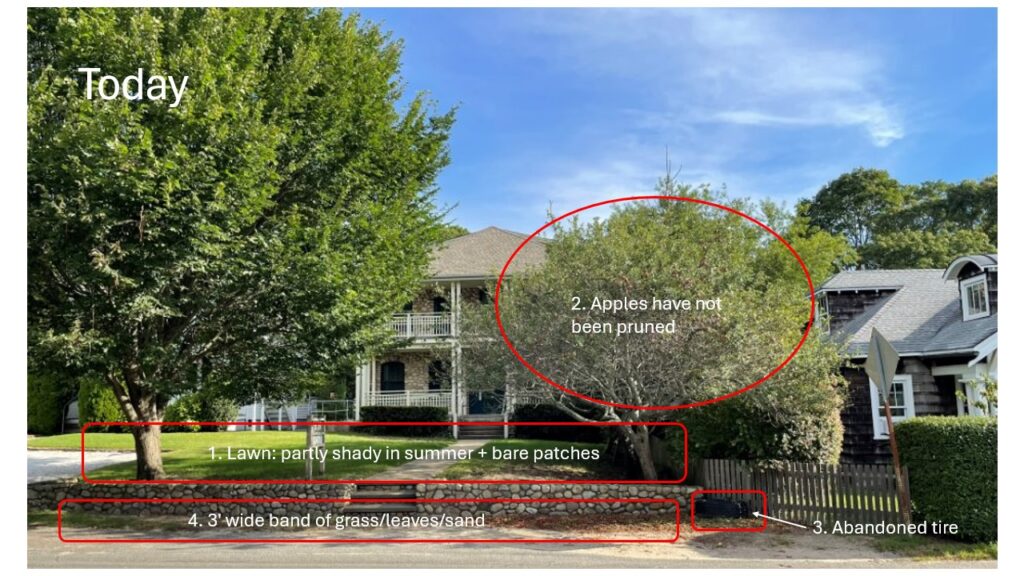
Something beautiful is unfolding at the Martha’s Vineyard Commission office.
What was once a conventionally managed lawn is beginning a thoughtful transformation into a living example of climate resilience in action. With the recent installation of nesting boxes and the first phases of native plantings underway, the Plant Local MVC Pollinator Garden is no longer just a plan on paper. It is becoming a visible commitment to biodiversity, habitat health, and the goals of the Island’s Climate Action Plan.
Why This Matters
The Vineyard’s Climate Action Plan includes a clear biodiversity objective: by 2040, our natural resources will be cooperatively managed and protected to promote habitat health, connectivity, and resiliency. Landscapes matter in this equation.
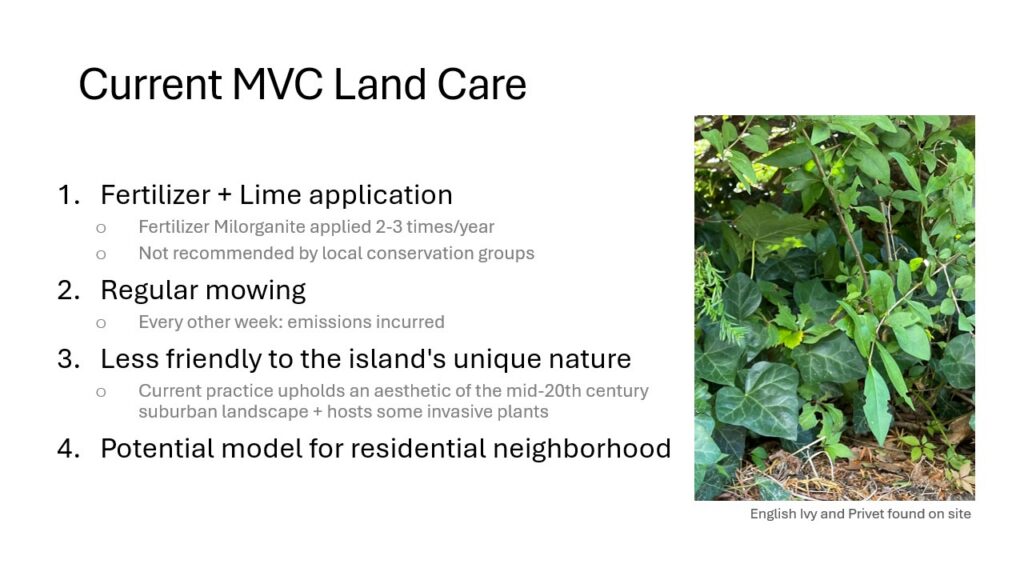
For decades, many residential and commercial properties across the Island have followed a mid-20th century suburban model of landscaping: fertilizer applications, frequent mowing, invasive shrubs, and ornamental plantings that offer little benefit to local wildlife. These practices require fossil fuel inputs, contribute to nutrient runoff, and reduce habitat value for pollinators and birds.
This project at the Martha’s Vineyard Commission shifts that paradigm.
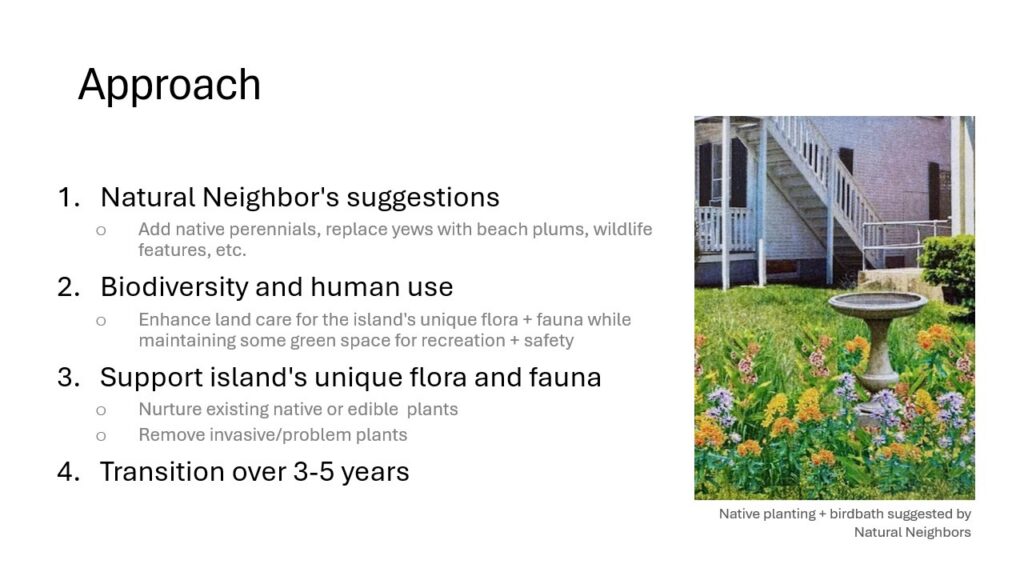
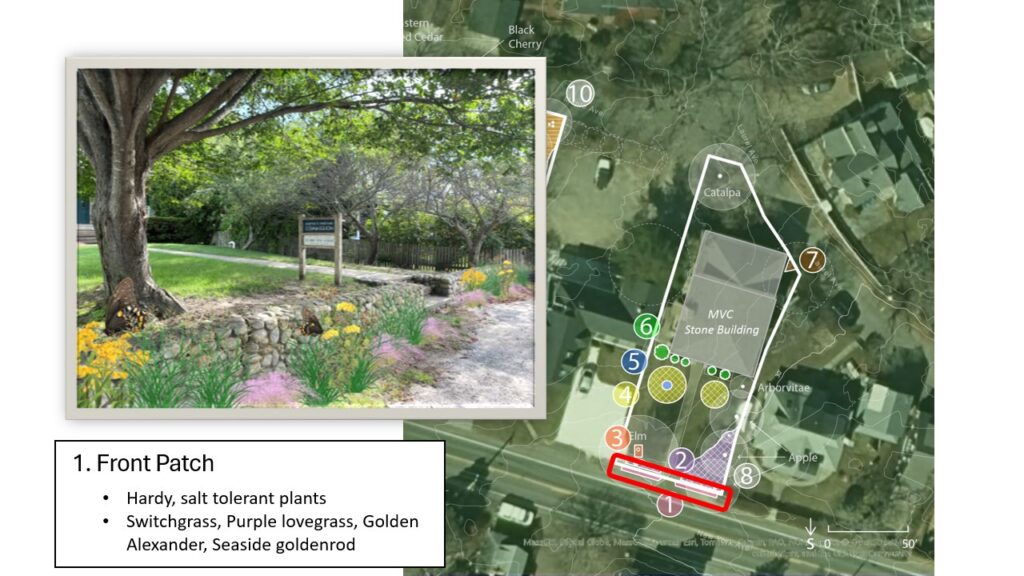
By replacing high-input lawn areas and invasive plants with native perennials, beach plums, meadow plantings, wildlife features, and pollinator habitat, the Commission’s grounds are becoming a model for what climate-resilient landscaping can look like on Martha’s Vineyard.
From Lawn to Living Habitat
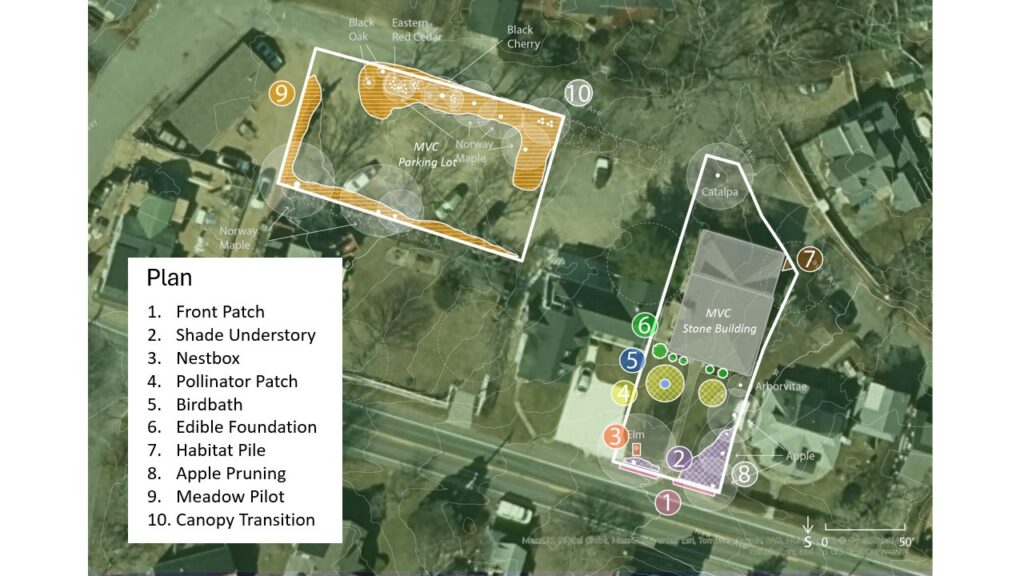
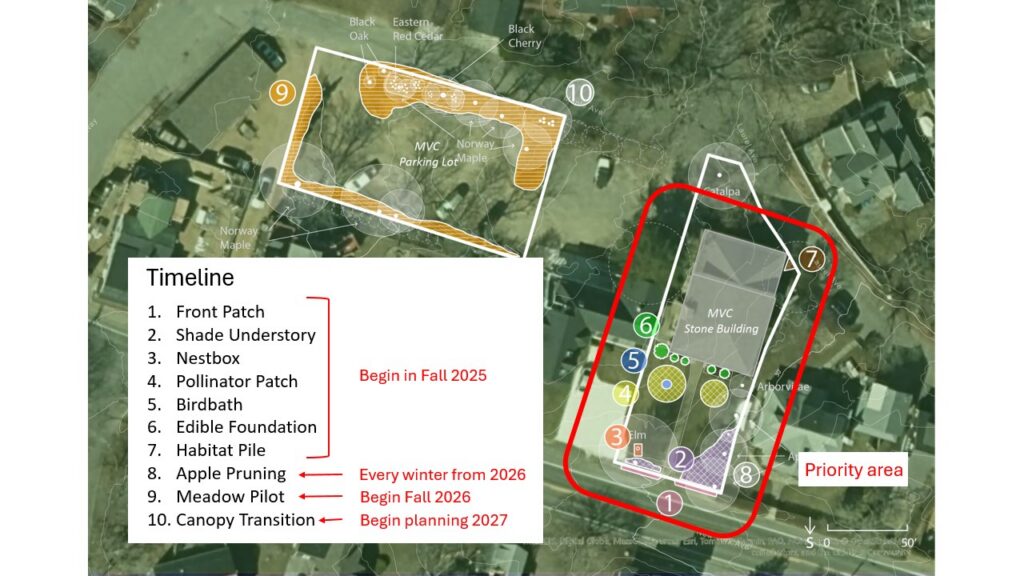
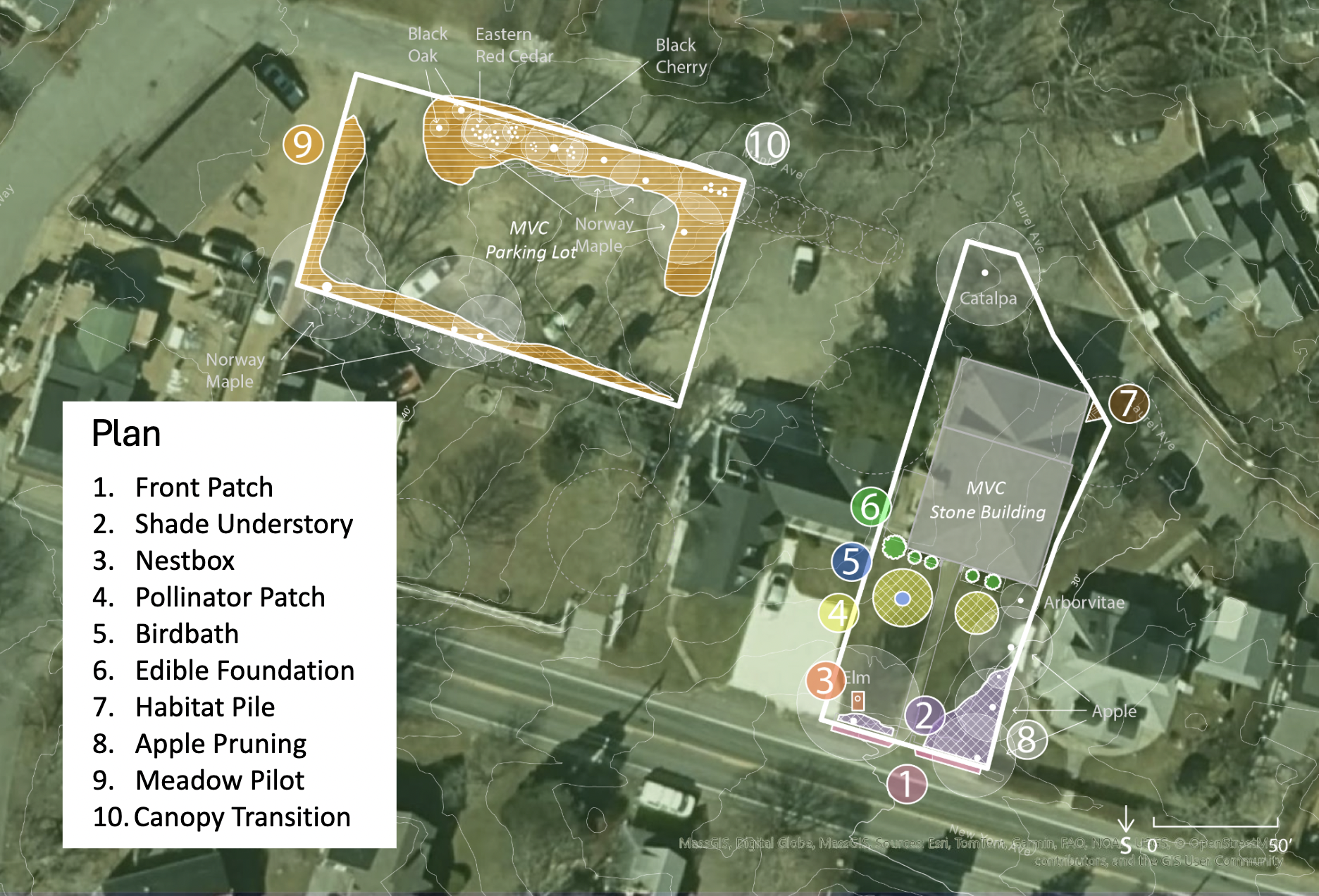
The transformation includes several key elements:
- A Front Patch of hardy, salt-tolerant natives like switchgrass and seaside goldenrod.
- A Shade Understory planted with columbine, wild geranium, and white wood aster.
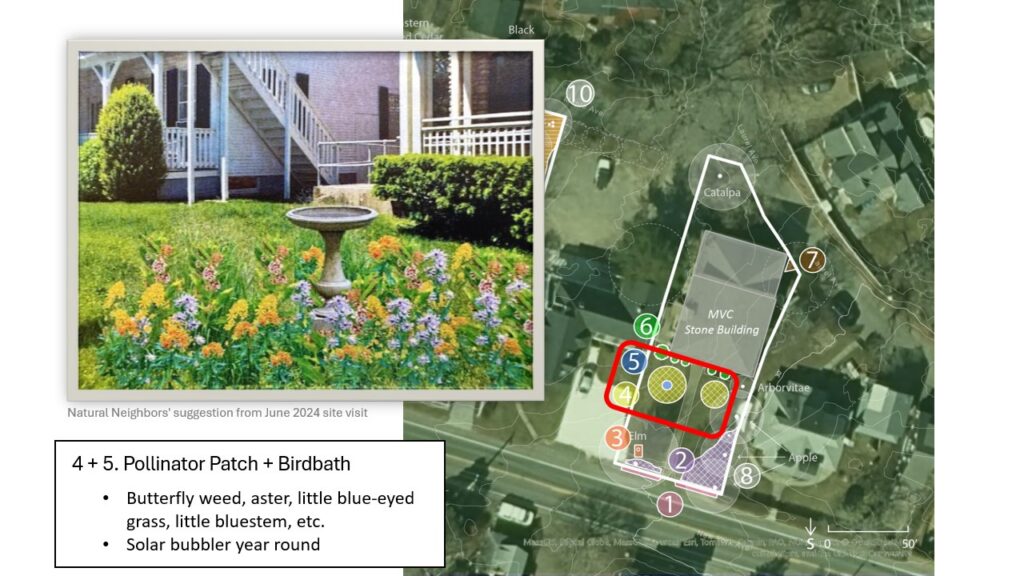
- A dedicated Pollinator Patch filled with butterfly weed, asters, little bluestem, and other native species.
- A Birdbath with a solar bubbler to provide year-round water.
- An Edible Foundation featuring beach plums and Nantucket shad, replacing non-native yews.
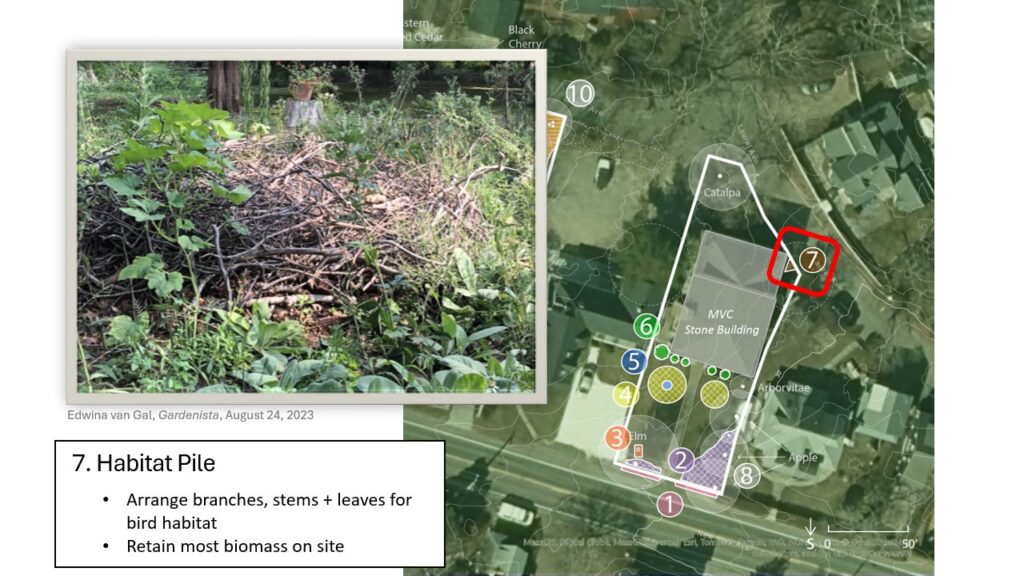
- A Habitat Pile created from on-site branches and biomass to shelter wildlife.
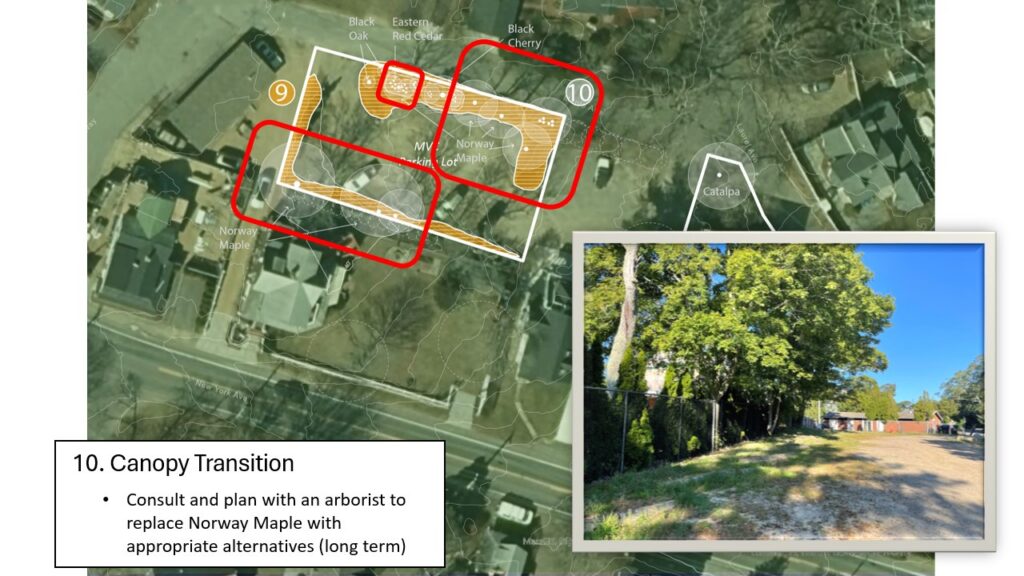
- A Meadow Pilot area that will reduce mowing and increase plant diversity.
- A long-term Canopy Transition plan to replace a Norway maple with more ecologically appropriate species.
And now, newly installed nest boxes offer protected habitat for small birds, installed in collaboration with Biodiversity Works’ Natural Neighbors program to ensure proper placement and predator prevention.
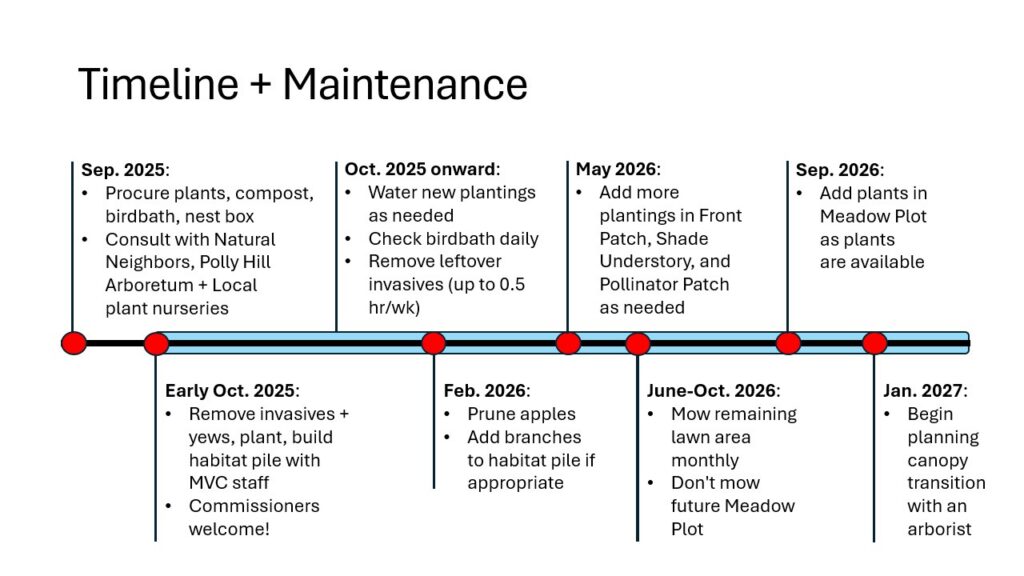
This is not an overnight makeover. The transition is intentionally phased over three to five years, allowing the landscape to evolve while maintaining areas for recreation, visibility, and safety.
Climate Resilience Starts in Our Yards
Healthy landscapes are climate infrastructure.
Native plants have deep root systems that improve soil health, absorb stormwater, and reduce runoff. Reduced mowing lowers emissions. Eliminating synthetic fertilizers protects our ponds and waterways. Diverse plantings provide food and shelter for pollinators, birds, and beneficial insects that support the Island’s broader ecosystem.
In short, what happens in our yards connects directly to resilience, biodiversity, and climate adaptation.
The Plant Local MV initiative began with a simple realization: we need more visible examples of native planting in residential landscapes. The MVC office now serves as one of those examples. It demonstrates that climate-resilient landscaping can be practical, beautiful, and achievable.
A Pilot for the Island
This project is intended to serve as a pilot and inspiration.
If you are planning your own yard updates this year, consider using the Plant Local MV guide as a starting point. It offers regionally appropriate native plant recommendations and practical guidance tailored to Martha’s Vineyard conditions.
You do not need to overhaul your entire yard at once. Start small:
- Replace a foundation shrub with native beach plum.
- Convert a corner of lawn into a pollinator patch.
- Leave the leaves in fall to support overwintering insects.
- Reduce mowing frequency.
- Remove one invasive plant and replace it with a native species.
Like the MVC grounds, your yard can transition gradually over time.
What’s Next
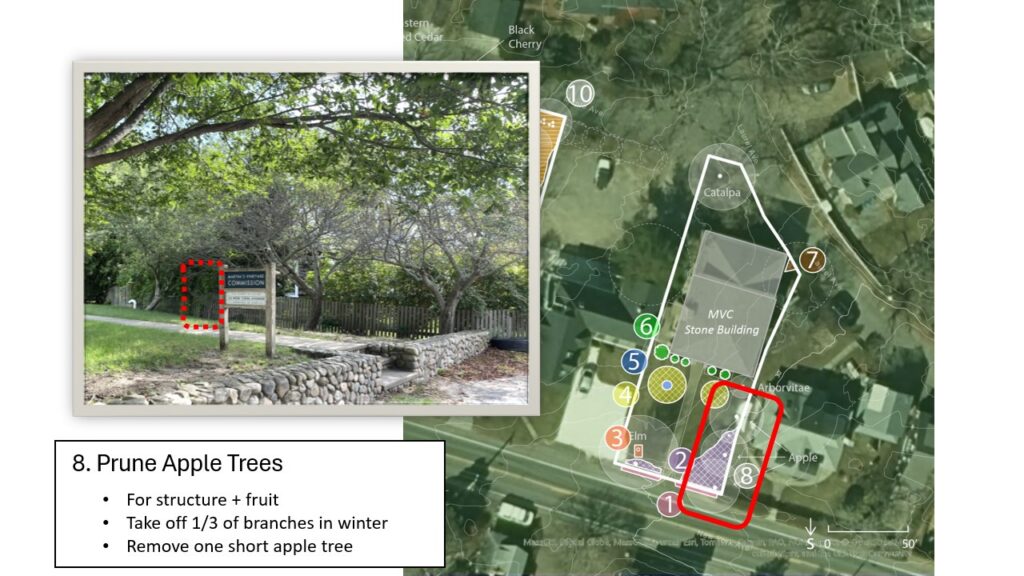
Plant procurement and initial installation began in Fall 2025. Invasive removals and early plantings are underway. Apple trees will be pruned for health and productivity. Additional native plantings will be added in spring and fall seasons. The Meadow Pilot will expand. Canopy transition planning with an arborist begins in 2027.
Each season will reveal new layers of growth.
We invite you to watch the transformation. Take a peek at the MVC grounds. Notice what is blooming. Observe the birds using the nest boxes. Pay attention to what changes when the lawn becomes habitat.
This is climate action you can see, and it is only the beginning 🌱