This winter reminded us: living on an island means being ready to take care of each other.
This past winter gave us a taste of what island life can throw at us: fierce nor’easters, extended power outages, blocked roads, and ferries that stopped running. For many of us, it was a wake-up call. And while Martha’s Vineyard hasn’t seen a direct hit from a major hurricane in decades, emergency managers remind us that it’s not a matter of if, but when a serious storm will test us again.
The good news? Being prepared doesn’t have to be overwhelming. A little planning now, at the community and household levels, makes all the difference when things get hard.
“On Martha’s Vineyard we think 3 days of shelter-in-place supplies may not be enough. Have at least 7–10 days of supplies on hand.” — Dukes County Emergency Management Association
Why island preparedness is different
When a storm hits the mainland, people can drive to the next town for help, supplies, or shelter. On Martha’s Vineyard, when the boats stop running and the roads flood, we are on our own. That’s not a reason to worry. It’s our motivation to plan ahead together.
Potential emergencies include severe weather (hurricanes, blizzards, flooding, tornadoes), extended power outages, downed trees and wires, contaminated drinking water, and wildfire. Each one requires a slightly different response. Which is why having a flexible plan matters.
Five steps to get started
- Sign up for CodeRED alerts – This free service sends emergency notifications to your phone, email, or text. Sign up at dukescounty.org or through your town’s website. It takes two minutes and could be the most important two minutes you spend this year.
- Make a family communication plan – Decide now: Where will you meet if you can’t reach each other? Who is your out-of-state contact? What’s your plan if you need to evacuate or shelter in place? FEMA’s ready.gov has a free fillable form to walk you through it.
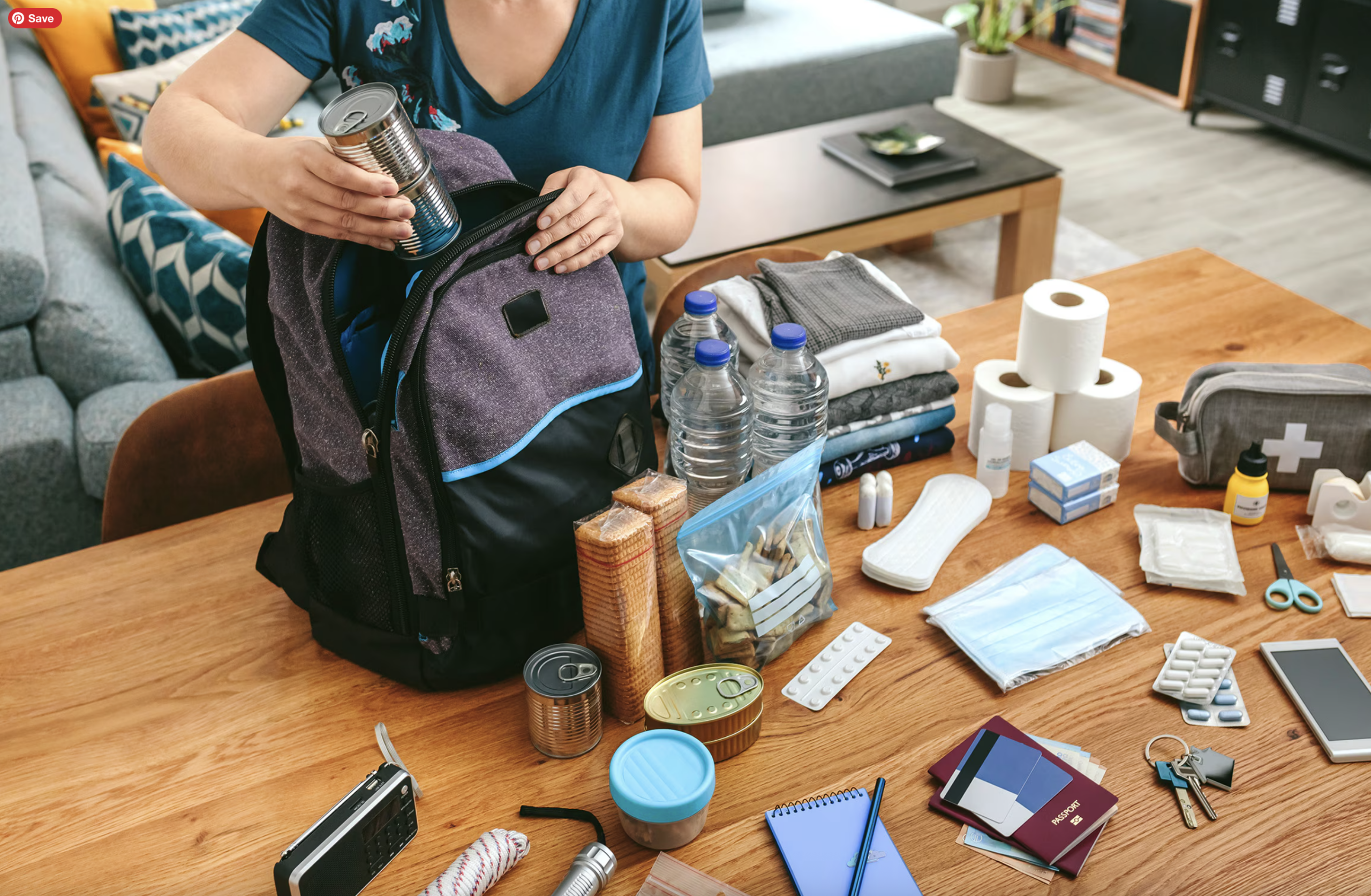
- Build your emergency supply kit – Aim for 7–10 days of essentials — more than the standard federal recommendation, because we’re an island. Include food, water, medications, and supplies for pets. (Details below.)
- Know your shelter options – During recent emergency events, Martha’s Vineyard provided a regional shelter at the Oak Bluffs School (50 Tradewinds Road) and town shelters have opened at libraries, schools, and even the Ag Hall. Check your town website for current status during an emergency.
- Check on your neighbors – Join or start a neighborhood phone tree. Know who on your street might need extra help, such as elderly neighbors, people with medical needs, those with mobility challenges. Community resilience is built one relationship at a time.
What to stock at home
A well-stocked home is your first line of defense. Keep supplies in an easy-to-reach spot and review them seasonally.
Essential supplies checklist
- Water (1 gallon/person/day, 7–10 days)
- Non-perishable food (7–10 days)
- Manual can opener
- Flashlight and extra batteries
- Battery or hand-crank radio
- First aid kit
- 7 days of prescription medications
- Extra eyeglasses / hearing aid batteries
- Cell phone charger + backup battery
- Cash (ATMs may not work)
- Important documents in a zip-lock bag
- Whistle (to signal for help)
- Pet food, water, and records
- Infant formula and diapers if needed
- Warm blanket or sleeping bag
- Cards, books, games for all ages
Also consider: a Go Bag
A Go Bag is a backpack with 72 hours of essentials — ready to grab if you need to leave quickly. Think of it as your “bail out bag.” Include copies of ID, a few days of medications, copies of important documents, phone charger, water, snacks, and cash. Don’t forget one for your pets. Ready-made Go Bags are available for purchase; Bainbridge Prepares (a community preparedness model from Washington State) has excellent guidance at bainbridgeprepares.org/news/tag/go+bag.
Staying informed during an emergency
Even without power or internet, you have options:
Radio: MVYRADIO 88.7 FM is your go-to for storm reports, school closings, and ferry updates. WCAI 90.1 FM (NPR Cape & Islands) and NOAA Weather Radio are also reliable. A battery-powered or hand-crank radio is a worthwhile investment.
Phone and text: CodeRED alerts come through even when data is slow. Charge all devices before a storm, and keep backup chargers charged.
Online (when available): Monitor Dukes County Emergency Management at dukescounty.gov/departments/emergency-management, your town’s website, Eversource at eversource.com for outage updates, and MEMA at mass.gov/info-details/emergency-information.
TV: MVTV (Xfinity channels 6, 8, 9) and the Emergency Alert System on channel 995.
Get involved: volunteer
Preparedness isn’t just individual, it’s a community effort. Martha’s Vineyard has two volunteer programs that welcome new members year-round:
MV CERT (Citizen Emergency Response Team) trains community members in first aid, emergency preparedness, and emergency sheltering. MV DART (Disaster Animal Response Team) focuses specifically on animals and pets during disasters. Both are coordinated through DCEMA and sign-up is available in Portuguese and English at bit.ly/DCEMAVolunteer.
The Red Cross and Salvation Army also welcome volunteers and are active on the island during emergencies.
A note from our community
This guide was inspired by a March 2024 community discussion organized by the Oak Bluffs Climate & Energy Advisory Committee, featuring Russell Hartenstine (West Tisbury Emergency Management Director), Jennelle Gadowski (OB Fire-EMS), and Nelson Wirtz (OB Fire-EMS Chief). Their comprehensive handout — drawing on resources from FEMA, MEMA, the Red Cross, and Dukes County Emergency Management — is the foundation for this post and is included below.
We’re grateful to Marilyn and the OB Climate & Energy Advisory Committee for their work pulling this information together for our island community.
Resources for further reading
Dukes County Emergency Management — dukescounty.gov/departments/emergency-management
Sign up for CodeRED emergency alerts — oakbluffsma.gov
Build a basic disaster supplies kit — ready.gov/kit
Make a family emergency plan — ready.gov/plan
MEMA: Be Prepared for Emergencies — mass.gov
Go Bag guide — Bainbridge Prepares (bainbridgeprepares.org)
Neighborhood preparedness model — Bainbridge Prepares
Volunteer with MV CERT or MV DART — bit.ly/DCEMAVolunteer
MVYRADIO storm closings and cancellations — mvyradio.org
Questions or additions? If you have island-specific preparedness tips, resources, or know of a neighborhood group forming around this work, we’d love to hear from you. Emergency preparedness is, at its heart, a community project. It’s The Vineyard Way.